
Garage Door Won’t Close: Safe Checks Before Calling for Repair
Separate an obstructed sensor from a mechanical problem, recognize stop-and-call conditions, and record useful details for your repair visit.
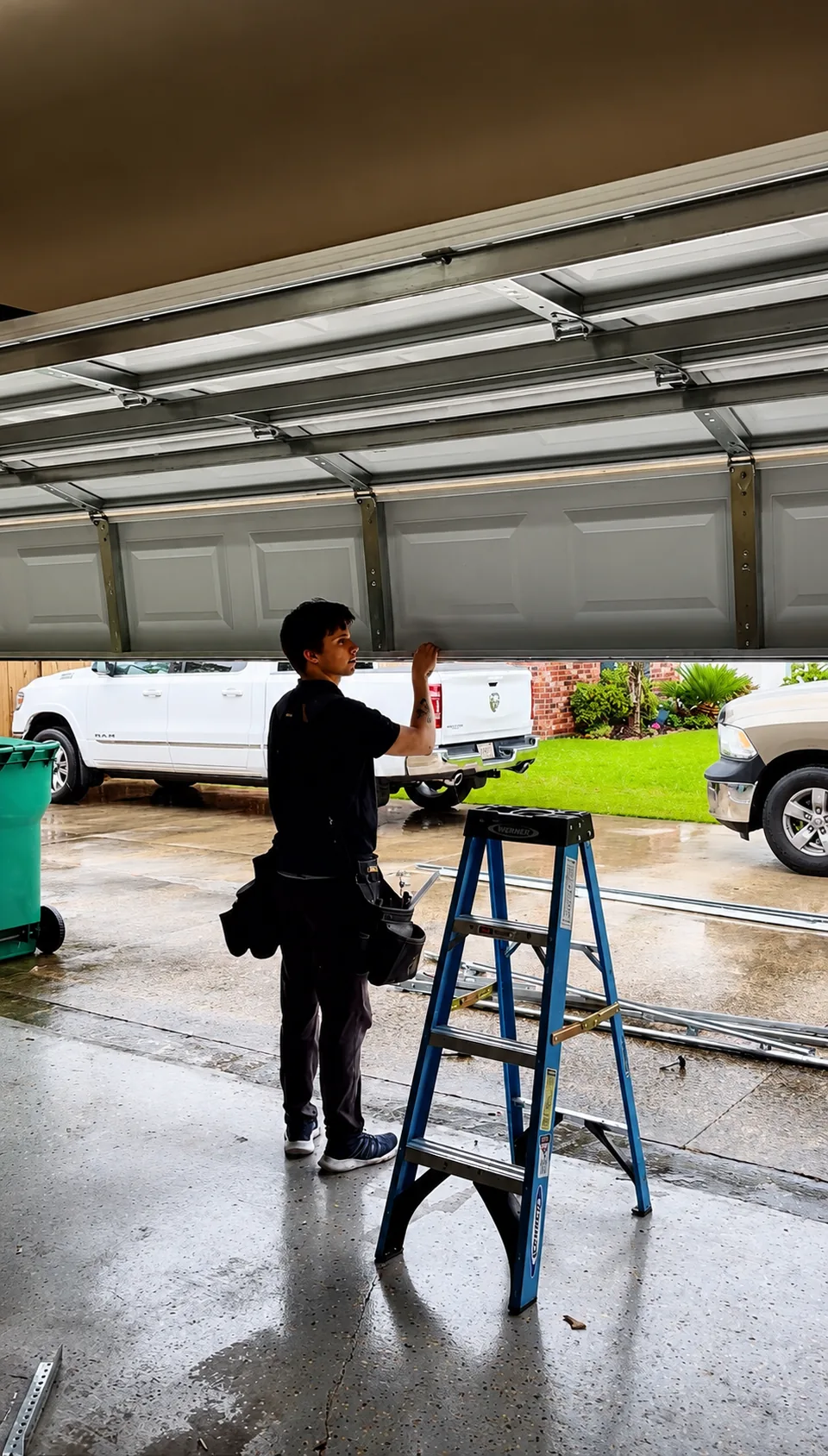
Stop using a damaged or uneven door. Never adjust springs, cables, drums or bottom brackets yourself.
Start with the door’s position
Keep children, pets and vehicles away from the opening. If the door is crooked, partly out of its tracks, hanging from one side or has a visibly damaged cable, stop using the opener. Do not stand under it or try to push it into place. A closing problem can be a door-support problem rather than an electrical fault.
If the door remains straight and there is no visible damage, observe what happens from a safe distance: does the motor respond, does the door move and reverse, or does nothing happen? Record the opener model and any blinking lights. Light codes vary by model; consult that model’s manual instead of assuming every flashing light means the same thing.
Check the photo-eye path without bypassing it
Look for a bin, broom, leaf or other object crossing the beam near the bottom of the doorway. Remove ordinary obstructions only when the door is stationary. If accessible from the side without reaching into moving hardware, gently clean dirty sensor lenses with a soft cloth. Observe the indicator lights and follow the manufacturer’s troubleshooting instructions.
An interrupted or misaligned safety beam can prevent automatic closing. Do not tape sensors together, disconnect them, bypass a warning or increase the opener’s force to make the door close. If a sensor bracket, wire or indicator remains abnormal, arrange opener service. Sensors are a safety device, not an inconvenience to work around.
When to stop troubleshooting
Stop if the door binds, scrapes, moves unevenly, has a broken spring or shows loose/frayed cables. Do not loosen tracks, drums, bottom brackets or spring hardware. Avoid repeatedly cycling an opener that is straining. If water has reached electrical equipment, stay clear and seek professional help rather than testing it.
Tell the office whether the opening is unsecured, where the door stopped, whether a vehicle is trapped and what changed before the failure. A safely taken photo of the overall door and opener model label can help identify the right service. Diagnosis still requires checking the complete door system; a sensor symptom alone does not establish which part needs replacement.
Related Services
Safety References
General information is not a diagnosis. Follow the instructions for your exact door and opener. References checked October 30, 2026.
Arrange a Garage Door Inspection
Serving Baton Rouge and surrounding Louisiana communities. Tell us what you observed; we provide an on-site diagnosis and written pricing before work begins.
More Homeowner Guides
Local Inspection and Service
When a guide points to an inspection rather than a safe homeowner check, find your local residential service information below.
- Garage door service in Baton Rouge
- Garage door service in Denham Springs
- Garage door service in Prairieville
- Garage door service in Gonzales
- Garage door service in Zachary
- Garage door service in Central
- Garage door service in Walker
- Garage door service in Baker
- Garage door service in Port Allen
- Garage door service in Addis